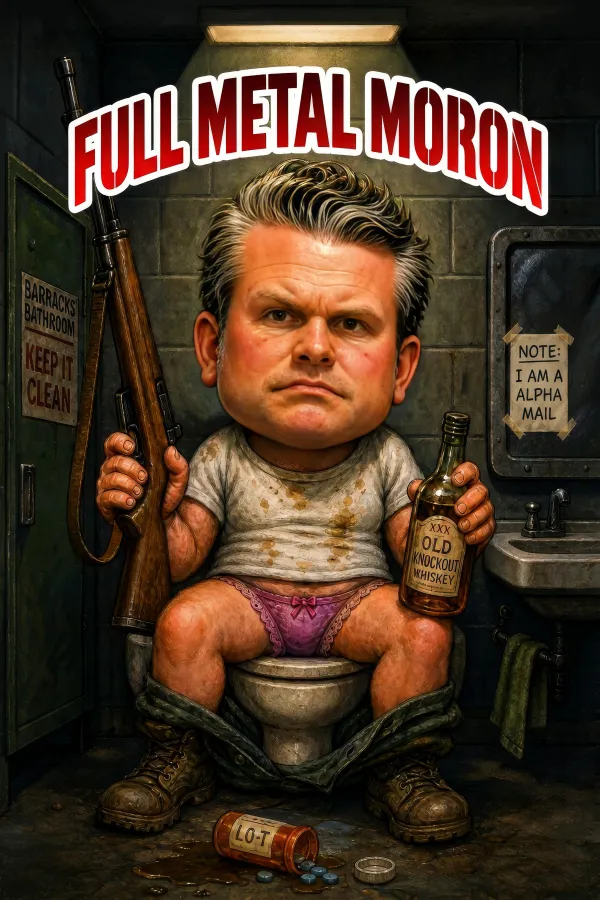
Someone in the United States government sat in a meeting, looked at a firing squad, and thought: this needs a stream.
Not a press pool. Not a written statement. A livestream. Defense Secretary Pete Hegseth announced the execution of Fort Hood shooter Nidal Malik Hasan would be public, the Pentagon confirmed that meant streaming it, and for a stretch of October 2026 that was the actual, official plan of the most powerful military on Earth. On Thursday the President called it off. We should still talk about how anyone got there.
The deterrence bit
The pitch was that broadcasting it "might have been a strong deterrent." Think about who that's meant to deter. The people we're worried about kill strangers and expect to die doing it. Footage of the state killing one of them doesn't scare that crowd. It's their highlight reel. You don't fight martyrdom propaganda by producing it in 1080p with a government watermark.
Critics in both parties said exactly this, out loud, right away. It's not a hot take. It's the first thought anyone has after about four seconds of thinking. The plan only survived until the first adult in the building looked at it.
You already know what happens next
Say it goes live. Before the smoke clears it's clipped, cropped to vertical, and running on a phone over Subway Surfers gameplay. There's a reaction video. There's a reaction to the reaction video. Somebody slows it down and adds a sad piano cover. A thousand accounts post it with "no context," and the algorithm, which can't tell a war crime from a cat video and doesn't care to, notices the engagement and serves it to a fourteen-year-old's feed at 1 a.m.
Nobody needed the government to make the internet worse at this. It was handling that fine on its own. The new idea was letting the state supply the footage.
Governing by announcement
So it got walked back. Not because anybody in charge thought it through, but because the noise got loud enough. What finally killed it was JD Vance saying, "if it's ultimately livestreamed, I'm not going to be watching it." That's where the bar was: the Vice President of the United States volunteering not to watch a man get shot.
The reversal is the funniest part. The President's post conceded that "very good and well meaning people would rather not watch him die, through streaming, or through any other visual device." Yes. That was the whole objection. Everybody said so on day one. It isn't a new insight when you get there last.
This is the loop now. Announce something insane, soak up the outrage, walk it back, then take credit for listening. Each round buys a week of attention, and attention is the only thing being governed.
The small type
Hasan murdered thirteen people. Nothing here is about sympathy for him. The point is simpler. A government that sees a firing squad and thinks content isn't running a justice system. It's running a channel. And for a few weeks, it was counting on us to tune in.